
Why Business Software Integration Fails for Nigerian Companies
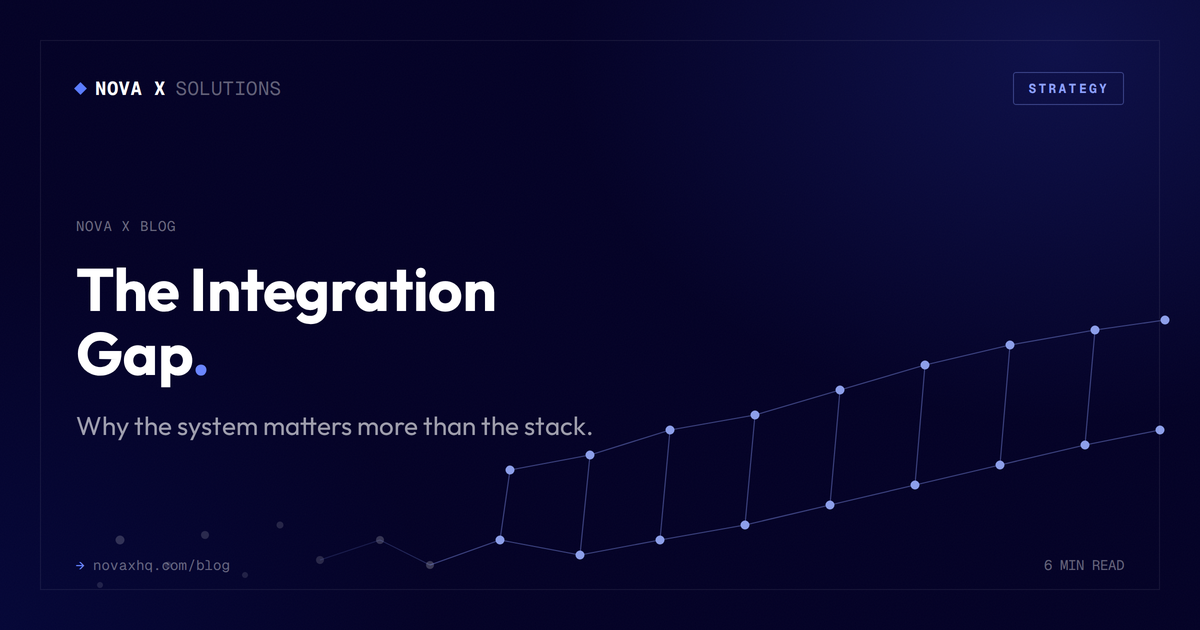
Ask a growing Nigerian business how many software tools it runs on, and the honest answer is usually somewhere between five and ten. Ask how many of those tools actually share data with each other, and the number drops close to zero.
That gap not the tools themselves, but the absence of anything holding them together is the real story behind why so many businesses feel like they're running fast and going nowhere.
The pattern, stated plainly
A CRM that doesn't talk to the accounting software. A payment dashboard that doesn't reconcile automatically with either. A separate tool for HR, another for project tracking, a spreadsheet that everyone secretly trusts more than any of the "real" systems. Each tool was a reasonable purchase on its own. None of them were bought as part of a plan.
This isn't a story about poor judgment. It's the predictable outcome of three pressures landing on Nigerian businesses at once: a cost structure that punishes dollar-denominated software, a SaaS industry largely built for markets that aren't Nigeria, and a compounding operational cost that almost nobody puts a number on until it's already expensive.
Why the stack keeps growing
Start with the money, because that's where the pattern starts.
Most default software choices, CRMs, project tools, accounting suites, marketing platforms, are priced in dollars by vendors who have never run payroll in naira. That pricing was tolerable when the exchange rate sat in the low hundreds. It isn't anymore.
The naira's official rate moved from roughly ₦997 to the dollar at the end of 2023 to over ₦1,500 within about a year, a depreciation north of 40%. Dollar-denominated cloud and software costs for Nigerian businesses have risen well over 100% across that same window, by some industry estimates, meaning a $1,000-a-year tool that cost close to ₦700,000 in 2023 can run past ₦1.5 million today, for the identical feature set.
Faced with that math, businesses don't cancel software. They ration it. A founder who needs a CRM, a help desk, and an automation tool doesn't license all three properly — they take the cheapest tier on each and stitch the gaps together by hand. The sprawl isn't a planning failure. It's what happens when four problems get solved with four separate discount-tier subscriptions instead of one connected system, because that system was never priced with this currency in mind.
Built for somewhere else
The forex problem is a symptom of a deeper one: most of these tools weren't designed with the Nigerian operating environment in view, and it shows beyond the price tag.
Payment integration is the clearest case. A business collecting through Paystack or Flutterwave routinely finds its CRM or accounting tool has no native handshake with either, because the product was built assuming Stripe or PayPal, neither of which serves Nigerian merchants well. The result is someone, somewhere, manually copying transaction references into a spreadsheet every week.
Compliance follows the same shape. The Nigeria Data Protection Act imposes data-handling obligations most foreign SaaS platforms aren't built to address, leaving businesses to bolt on their own consent flows after the fact. Add support hours tuned to a different time zone and feature sets that assume infrastructure most Nigerian businesses don't have, and the mismatch isn't malicious, it's just a market the product was never built for. Each gap it leaves gets filled with another tool.
The cost no one puts on an invoice
This is the part that rarely makes it into a budget conversation: the operational cost of disconnected systems is almost always larger than what the tools cost to license.
Every system that doesn't talk to another creates a human translator, someone whose real job, whether or not it's in their title, is moving data by hand from one place to another. A rep who logs a deal in the CRM and re-enters it in the accounting tool. A support agent who can't see a client's order history because it lives somewhere else, so every inquiry starts from zero.
The deeper cost is what this does to decision-making. When customer, financial, and operational data sit in five disconnected places, nobody not even the founder has an accurate, real-time picture of the business. Reports take days instead of minutes. Discrepancies surface weeks after they happen, when they're hardest to untangle. Decisions get made on instinct because the data took too long to assemble.
There's a trust cost on top of that. Customers notice when a support agent doesn't know about their last interaction, or when an invoice contradicts what was promised on a call. Each instance is forgivable on its own. Across hundreds of interactions a month, they add up to a business that feels unreliable, even when everyone inside it is working hard.
Tool-stacking is not a strategy
The instinctive response to a gap is to buy something to fill it. Need better reporting? Add a BI tool. Need automation? Add a workflow platform. Each purchase solves its immediate problem and opens a new integration gap at the same time, because nobody asked whether the new tool would actually connect to what already exists.
That's how a business ends up with ten tools and no coherent system. Each addition was individually rational. The total isn't. The more useful question what does this business actually need its software to do, end to end, and what's the smallest number of connected systems that can do it almost never gets asked, because it requires stepping back instead of buying forward.
Where we land on this
We don't start an engagement by recommending a new platform. We start by auditing what's already running: every system in use, where the data actually lives, which processes are manual because two tools were never meant to talk to each other, and which of the existing tools are load-bearing versus kept out of habit. Only after that picture exists does it make sense to talk about what to build, replace, or connect.
More often than not, the answer isn't another subscription. It's the integration layer that lets the tools a business already trusts work as one system, which is usually faster, cheaper, and more durable than another platform migration.
The businesses that pull ahead from here won't be the ones with the most tools. They'll be the ones that stopped stacking and started integrating.
Nova X Solutions builds integrated digital ecosystems for fintech, healthtech, insurance, NGO's, logistics, and other businesses across Nigeria and beyond — auditing what's already there before recommending what's next. Learn more at novaxhq.com.
Keep reading
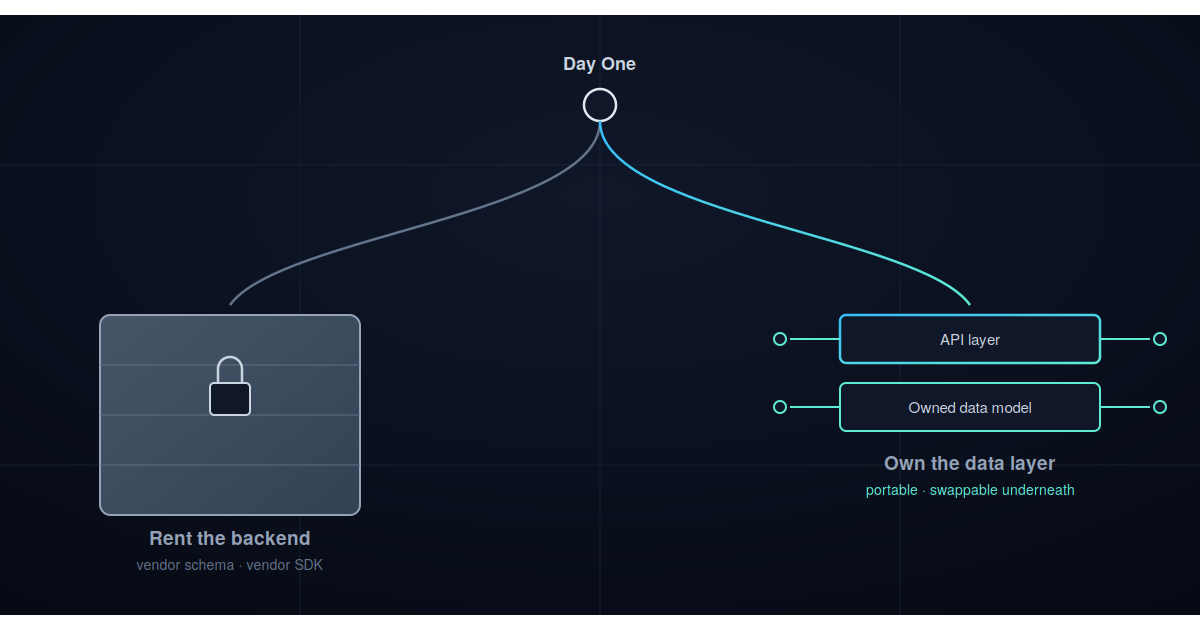
The Infrastructural Decision Every Business Should Make Early
Every growing business eventually hits the same fork: own your data and API layer, or keep renting it. Here's why this decision should be made on purpose, not by default.
Read article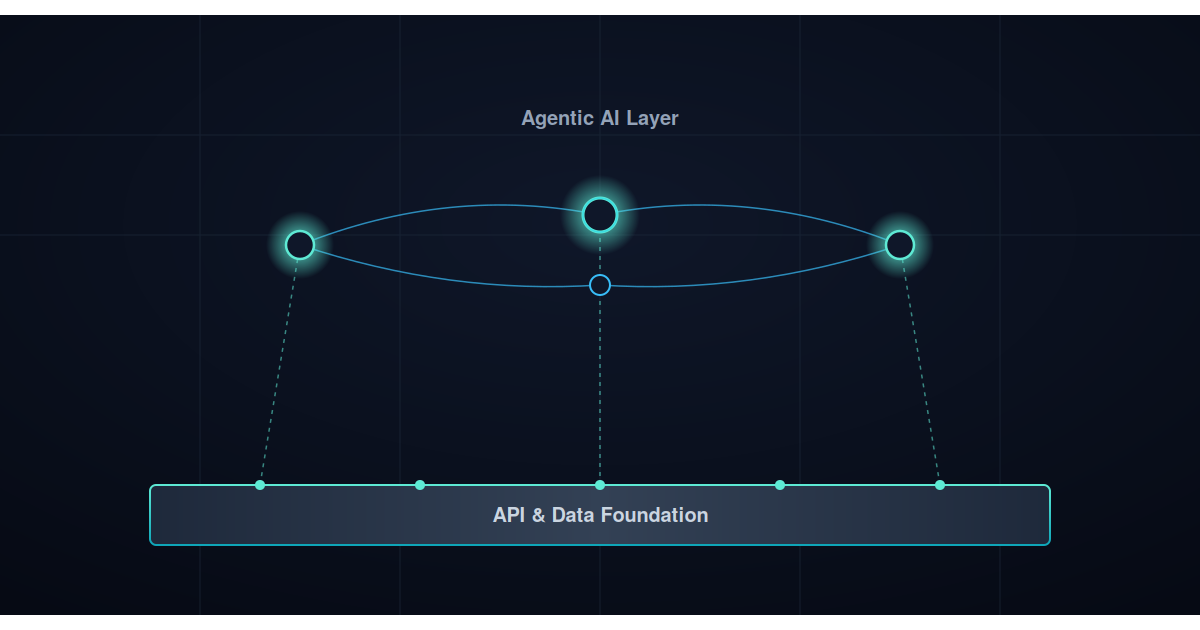
The Agentic AI Gap: Why the Infrastructure Matters More Than the Model
Agentic AI adoption is surging globally and across Nigeria, but most enterprise systems aren't built to use it. Here's what actually needs to come first.
Read article
Building Systems That Hold Under Pressure
How Nova X Solutions architects resilient fintech, insurance, and NGO platforms that hold up under real-world load, failure, and scale.
Read article