
The Agentic AI Gap: Why the Infrastructure Matters More Than the Model
Two numbers worth sitting with: by some measures, the large majority of Nigerians now use AI tools weekly for work, learning, or exploring new business ideas — among the highest personal adoption rates anywhere in the world. At the same time, structural AI adoption inside Nigerian organizations is estimated in the single digits, with the country ranking near the bottom of global AI-readiness indices.
That's not a contradiction. It's a pattern playing out everywhere agentic AI is being discussed, and it's worth unpacking before another budget cycle gets spent on the wrong half of the problem.
What "agentic" actually means, beyond the keyword
A chatbot answers questions. An agent does things. The defining shift with agentic AI isn't that it talks more fluently — it's that it can plan a multi-step task, call APIs, pull live data from a CRM or database, take an action inside another system, and adjust based on the outcome, with limited human input along the way.
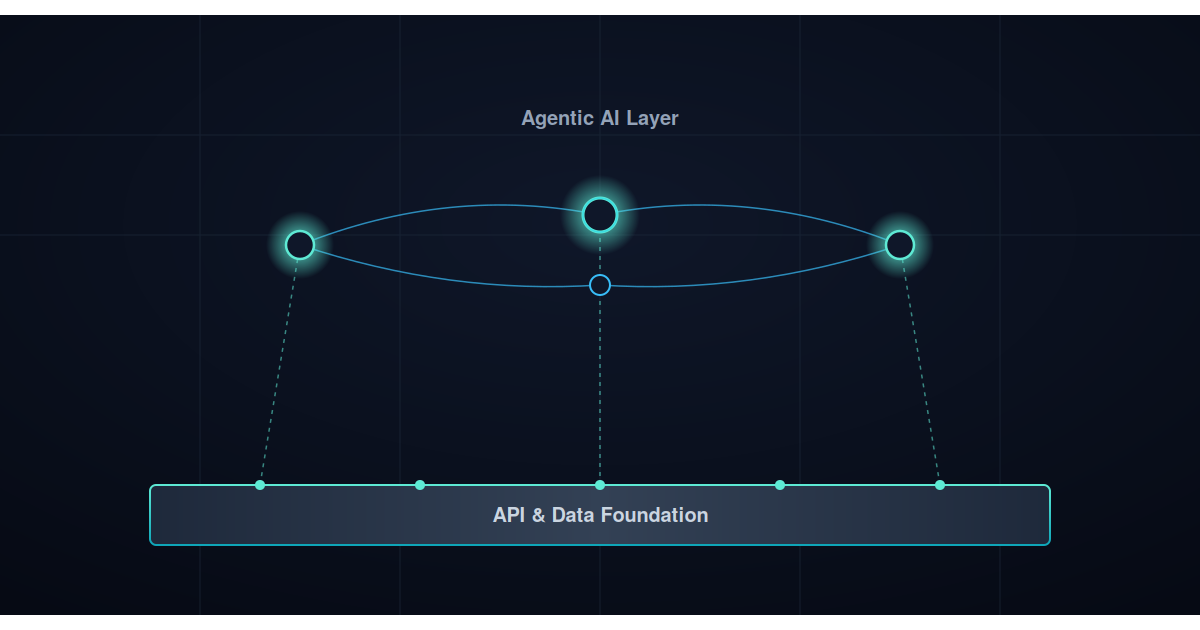
That distinction matters because it changes what "adoption" requires. A person can adopt a chatbot by opening a browser tab. A business can't adopt an agent without first giving it somewhere safe and structured to act — clean data, stable APIs, defined permissions, and a way to audit what it did and why.
The gap, in plain terms
Globally, enterprise software is moving fast on this front. Analyst surveys this year put a large share of newly shipped enterprise applications as already embedding at least one AI agent, though a much smaller share of organizations have one actually running in production — most are still stuck somewhere between a working pilot and a system they trust with real workflows.
The reason for that stall shows up consistently across industry research from Deloitte, Gartner, and infrastructure vendors covering this space: the bottleneck almost never turns out to be the model. It's the data and API layer underneath it. Agents need governed, well-documented APIs to act through, consistent and canonical data to reason over, and logging detailed enough to audit every decision after the fact. Organizations that have this in place can move an agent from pilot to production in months. Organizations that don't end up rebuilding their integration layer mid-project an expensive way to discover the same lesson.
Why this lands differently in African markets
For African businesses specifically, the opportunity framing around agentic AI has been genuinely compelling: agents that can handle multi-currency pricing, translate and localize customer support across several languages, reconcile transactions across providers, or route logistics in real time represent exactly the kind of leverage that's historically required large back-office teams.
But that opportunity sits on top of the same prerequisite every enterprise faces, often with an extra layer of difficulty. A large share of African SMEs, which collectively account for most employment on the continent are still running on legacy systems never designed to expose clean APIs in the first place. Add inconsistent power and connectivity, thinner technical teams, and data scattered across spreadsheets and disconnected tools, and the agent layer isn't the hard part. It's everything underneath it.
This is also why the personal-adoption numbers and the enterprise-readiness numbers can both be true at once. An individual using AI to draft a business plan or summarize a document needs nothing from their employer's systems. An agent reconciling payments across three payment processors needs those systems to already talk to each other reliably which, for most organizations, they don't yet.
What actually needs to happen first
None of this is an argument against agentic AI. It's an argument about sequencing. Before any agent touches a production workflow, the organizations that succeed tend to have done the unglamorous work first:
An API-first backend, where core systems expose stable, documented, authenticated endpoints not just a database an agent has to query directly.
A canonical data layer, where "customer," "transaction," or "claim" means the same thing across every system that touches it, instead of three slightly different versions living in three different tools.
Audit logging by default, so every action an agent takes every API call, every record it touches is traceable after the fact, not just when something goes wrong.
A narrow, well-scoped first use case, chosen for clean data access over sheer business value. A modest win on a well-integrated workflow beats a stalled pilot on a high-value one with messy data underneath it.
This is, not coincidentally, the same foundation that makes any enterprise system more reliable, regardless of whether an AI agent ever touches it, the architecture holds up under load, integrates cleanly across services, and gives every team visibility into what's actually happening inside it.
Where we sit on this
We're not in the business of selling agentic AI as a feature to bolt onto a legacy system. We're in the business of building the integrated, API-first, data-disciplined systems that make agentic AI, or any future capability something a business can actually adopt safely, rather than something that breaks the first time it touches a real workflow.
The hype cycle will keep moving. The businesses that benefit from it will be the ones whose systems were ready before the agents showed up.
Nova X Solutions builds integrated digital ecosystems backend architecture, APIs, and data layers for businesses across fintech, insurance, healthtech, and beyond. Learn more at novaxhq.com.
Keep reading
The Infrastructural Decision Every Business Should Make Early
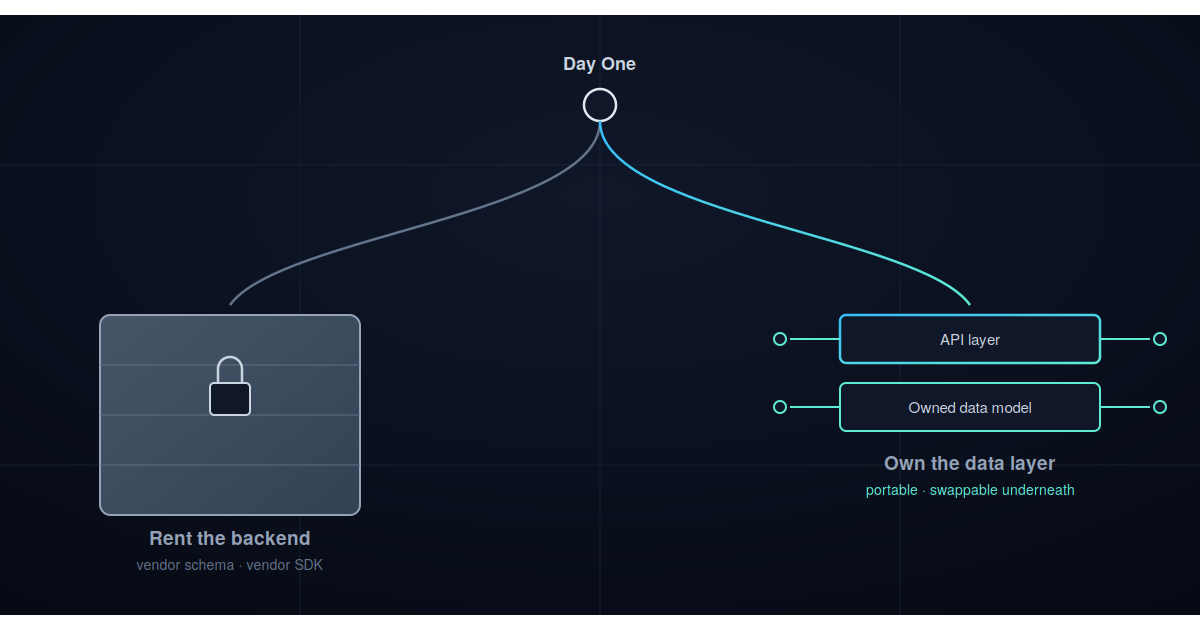
Every growing business eventually hits the same fork: own your data and API layer, or keep renting it. Here's why this decision should be made on purpose, not by default.
Read article
Building Systems That Hold Under Pressure
How Nova X Solutions architects resilient fintech, insurance, and NGO platforms that hold up under real-world load, failure, and scale.
Read article